
2048 6x6
Ads Details
Un, Gujarat
1 hour ago
Additional Details
22134
5
New
Description
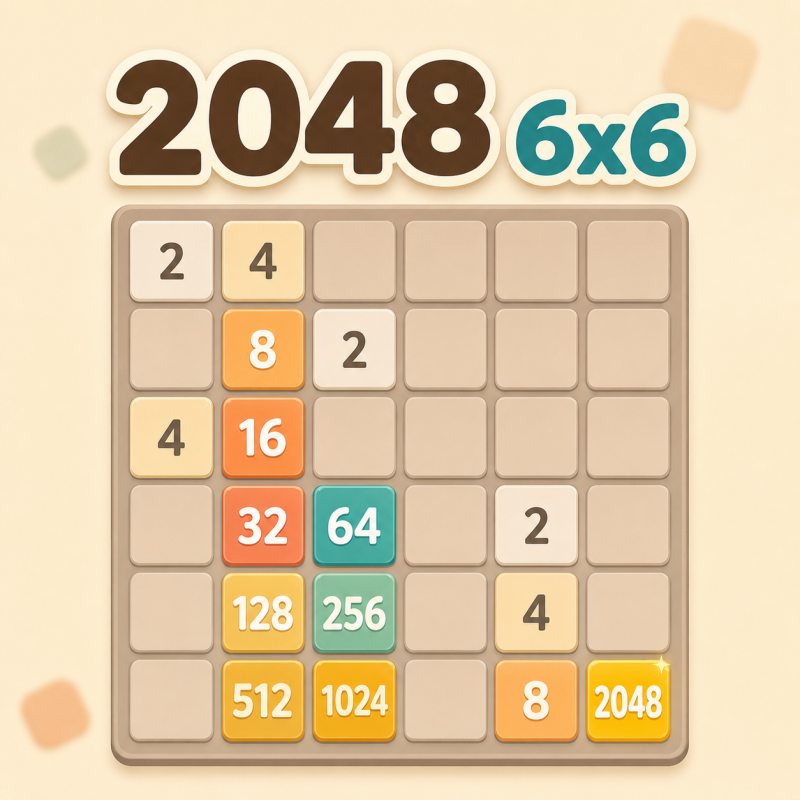
2048 6x6 brings a spacious new approach to the familiar number-merging puzzle. Instead of playing on the traditional 4x4 grid, players receive a larger board with 36 cells. This extra room creates more opportunities to organize tiles, prepare long combinations, and recover from small mistakes.
The main objective remains easy to understand: move the tiles, combine matching numbers, and create the highest-value tile possible. However, the expanded grid changes the rhythm of every round. Players have more freedom, but they must also manage a greater number of tiles. As the board fills, careful planning becomes essential.
Whether you are discovering 2048 for the first time or searching for a more strategic version of the classic game, 2048 6x6 delivers a relaxing yet challenging puzzle experience.
How the Number-Merging System Works
Every round begins with a small number of tiles placed on the board. Players move all available tiles in one of four directions: up, down, left, or right. When two tiles with the same value touch, they merge into a single tile worth twice as much.
For example, two tiles marked 2 create a 4. Two 4 tiles become an 8, two 8 tiles produce a 16, and the sequence continues through 32, 64, 128, 256, and beyond. After each valid move, a new low-value tile appears in an empty cell.
The rules are simple, but every swipe changes multiple positions at once. A move that creates one useful merge may also separate other matching tiles or push an important number away from its planned location. The round ends when the entire grid is occupied and no neighboring tiles can be combined.
Why the 6x6 Board Changes the Experience
The larger grid is the defining feature of 2048 6x6. With more open cells, players have additional time to develop their strategy before the board becomes crowded. It is easier to build several number chains and prepare combinations without immediately becoming trapped.
However, more space does not automatically make the game easy. A large board can become disorganized when tiles are moved without a clear purpose. Low-value numbers may spread across different areas, preventing efficient merges and gradually reducing the available space.
The 6x6 layout therefore rewards long-term thinking. Players must decide where to store their highest tile, how to arrange smaller numbers, and which direction should remain the foundation of their strategy. Instead of focusing only on the next merge, successful players consider how each move will affect the entire board.
Show MoreLocation
Reviews (0)

Similar Ads




salejusthere.com, Free Classified Website - is dedicated for the classified industry so that product/service listing can boost commercial exchanges world wide.