Wordle: The Simple Word Game That Became a Daily Ritual
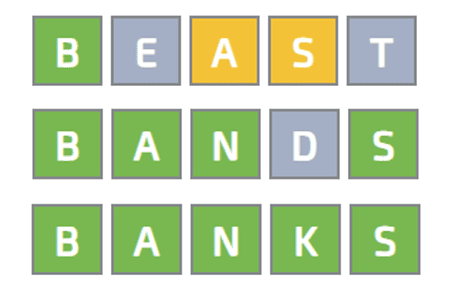
Wordle is a deceptively simple online word puzzle: players have six attempts to guess a five-letter word. After each guess, colored tiles offer clues. Green means a letter is in the correct position, yellow means it appears elsewhere in the answer, and gray means it is not in the word. The rules take moments to learn, yet the game’s combination of deduction, vocabulary, and suspense has made it a daily ritual for millions.
Why Wordle Became So Popular
Part of Wordle’s appeal lies in its restraint. Unlike many digital games, it has no levels, advertisements, or endless stream of challenges. Everyone receives the same puzzle each day, and a game takes only a few minutes. This limited format makes it easy to fit into a morning routine while giving players a shared experience to discuss.
The game also offers a satisfying balance between skill and chance. Players can choose opening guesses that reveal common letters, then use the feedback to narrow down possibilities. A strong first guess might test frequent vowels and consonants, while later guesses can rule out several candidate words at once. But the answer may still depend on luck: a pattern such as “_IGHT” could lead to several plausible words, and one wrong choice can use up a valuable attempt.
Wordle’s familiar grid of colored squares helped it travel beyond the game itself. Players could share their results without revealing the answer, inviting friends to compare strategies or simply celebrate a successful solve. In this way, the puzzle became a small social event rather than a solitary pastime.
More Than a Vocabulary Test
Wordle can encourage practical reasoning. Players must remember previous clues, avoid reusing eliminated letters, and distinguish between a word that fits the pattern and one that is actually likely to be the answer. The best approach is not always to guess the most obvious word. Sometimes a “probe” guess—one chosen to test several new letters—can provide more useful information than a direct attempt.
The game can also make language feel playful. A rare word may challenge even confident players, while an ordinary word can be surprisingly difficult because its letters fit several combinations. This reminds players that knowing many words is helpful, but careful elimination matters just as much.
The Limits of the Daily Puzzle
Wordle’s simplicity has drawbacks. For some players, maintaining a winning streak can turn recreation into pressure. A missed day or unlucky guess may feel more significant than it should, especially when results are compared publicly. Others may find the once-a-day limit frustrating or the puzzle too easy after learning effective strategies.
There is also a question of accessibility. The standard game relies on English spelling and vocabulary, which can disadvantage people learning the language or those less familiar with particular words. Alternative versions and adaptations can broaden access, but they may differ in difficulty and in what they assume players know.
A Small Game With Lasting Appeal
Wordle is not a profound test of intelligence, nor does every puzzle demand deep strategy. Its success comes from combining clear rules, modest challenge, and social connection in a compact format. It offers a brief pause in the day and a shared problem with a definite solution.
That modest scale may be its greatest strength. Wordle asks for a few minutes, rewards attention, and then lets players move on. In a crowded digital world, a game that knows when to stop can be just as compelling as one that never ends.
