Coloring Pages For Printing To Refresh Busy Homeschool Breaks
Homeschool breaks can get messy when one lesson ends and the next has not begun. Children may still be thinking about math, looking for a snack, or wondering what happens next while you prepare another subject. A short creative pause can soften that transition without turning the break into another assignment. With free coloring pages, a home printer, and a small box of crayons, you can offer something familiar, screen-free, and easy to start. ColoringPagesCreative fits naturally into these in-between moments, whether you have five minutes before reading or a longer pause before the afternoon lessons begin.
1. Why Homeschool Breaks Can Feel Harder Than Expected
A break sounds simple until everyone reaches it with a different level of energy. One child may still be focused on the last worksheet, another may want to move around, and a younger sibling may suddenly need attention. When every pause requires a new activity, new instructions, or another decision, the homeschool day can begin to feel crowded.
A useful break does not have to teach anything. Sometimes its only job is to change the pace. A black-and-white printable, a few colored pencils, and a clear place at the table can give children something predictable to do while you put away math manipulatives, find the next book, or simply sit quietly for a moment.
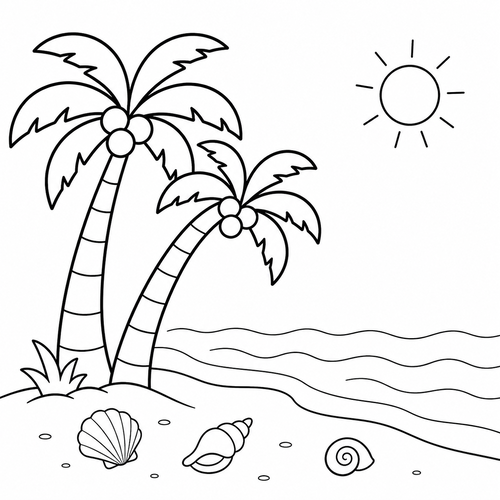
Two beach palms with sun waves and seashells
1.1 When A Short Break Becomes Another Source Of Noise
Screens can fill a break quickly, but stopping a game or video five minutes later may create another transition. Complicated crafts have a different problem: paint, glue, scissors, setup, and cleanup can take longer than the break itself.
Printable coloring sits comfortably between those extremes. There is almost nothing to explain, and the activity can stop whenever the next lesson is ready. Younger children often manage pages with bold outlines, one clear subject, and generous coloring spaces more comfortably. Older children may prefer detailed animals, landscapes, patterns, or fantasy scenes.
If your child likes to color coloring pages from beginning to end, match the design to the time available. A half-finished intricate castle may frustrate a child who expected to complete it, while a simple puppy or truck can feel satisfying during a short transition.
1.2 The Ten Minute Pause That Changed The Morning
Imagine moving from fractions to reading practice while two children argue over who gets to choose the next activity. Instead of negotiating another game, you place two animal printables on the table and set out a cup of crayons.
One child turns a fox orange and blue. The other gives a dog spotted fur and draws a little yard beside it. Neither picture needs to be correct. More importantly, each child has something separate to focus on.
Ten minutes later, the reading books come out. Finished pages can go on the refrigerator; unfinished ones can slide into a folder for another day. The family moves forward without making the break feel like another piece of schoolwork.
2. How Printable Coloring Pages Fit The Time You Actually Have
The length of the break should influence the page you choose. A five-minute pause before science needs a different design from a twenty-minute midday break. Matching complexity to available time makes the activity easier to start and easier to stop.
Coloring pages for printing become more useful when you consider three things together: time, detail, and your child's current energy. A restless child may want a lively dinosaur even during a quiet break, while someone tired after handwriting may prefer a garden, pet, or simple nature scene.
A practical way to choose is:
For about five minutes, choose one main subject, thick clean outlines, and large open coloring areas.
For ten to fifteen minutes, choose moderate detail, a familiar theme, and a picture that can still look satisfying if left unfinished.
For twenty minutes or more, choose richer scenery, smaller coloring spaces, and a design worth saving in an unfinished-page folder.
2.1 Quick Designs For Short Transitions
When the break is brief, reduce decisions. A page with one obvious subject allows children to begin almost immediately instead of studying dozens of tiny spaces first.
Animals, cars, trucks, fruit, stars, hearts, simple outdoor scenes, and seasonal objects work well because their shapes are easy to recognize. These designs are also useful when siblings share a table. Give each child a different sheet, place crayons in the middle, and very little explanation is required.
For younger children, check whether the outlines are clearly separated and whether the main areas are large enough for crayons. A design can look simple on screen yet feel crowded once printed, so viewing the actual page before choosing it can prevent frustration.
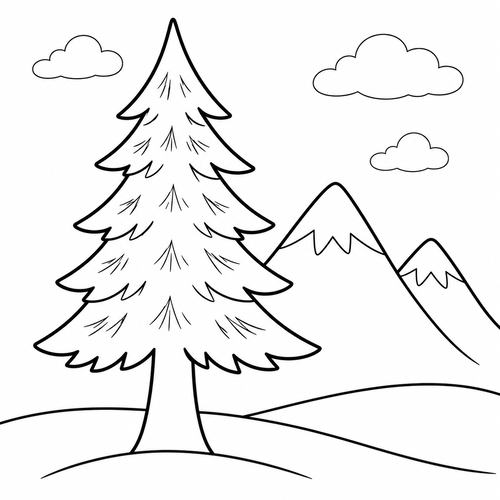
Tall pine tree with snowy mountains and clouds
2.2 More Detail For A Longer Midday Pause
A longer break gives children room to settle into a picture. Older kids may enjoy realistic animals, forests, gardens, fantasy worlds, seasonal scenes, geometric patterns, or illustrations containing several smaller sections.
This is a useful place to keep coloring pages printable in a clearly named digital folder. Save a mixture of easy, medium, and detailed PDF or JPG files so you do not have to search for something new every time the schedule changes.
Print setup matters too. A clean black-and-white file saves ink and keeps outlines easy to see. US Letter works naturally with many home printers; if you print on A4 paper, check the preview first so important lines are not clipped. For most pages, standard printer paper is enough, while slightly heavier paper may feel better when children use markers.
3. A Gallery Of Printable Coloring Pages For Different Homeschool Moods
Age is not the only useful way to organize a coloring collection. Mood matters just as much.
After handwriting or a difficult worksheet, a child with extra energy may choose a race car, dinosaur, spaceship, or active animal. Someone who wants a slower pause may prefer flowers, pets, a garden, a landscape, or a cozy seasonal scene. Fantasy creatures can provide more imagination, while realistic animals and nature pictures suit children who enjoy recognizable subjects.
Printable coloring sheets can therefore rotate by interest, mood, season, and difficulty rather than following one fixed sequence. Keeping several themes available also prevents coloring from feeling repetitive. A puppy by a fence can lead to an invented name or story; a moon-and-stars page might encourage unusual color choices; a fantasy creature can look completely different every time it is printed.
Quality should remain simple to judge: clear black outlines, a white background, uncluttered spacing, and enough room for the coloring tool your child prefers. Crayons need larger spaces than fine colored pencils, so the same design may suit one child better than another.
4. Prepare A Small Break Routine Without Adding More Work
You do not need a full craft cabinet beside the homeschool table. A small, consistent setup usually makes the break easier because children already know where everything belongs.
Keep crayons or colored pencils in one container, standard paper near the printer, and one folder for unfinished pictures. That is enough for most everyday coloring breaks. Markers, paint, glue, and other supplies can stay elsewhere until you actually plan a longer creative activity.
It also helps to limit visible choices. A large stack of twenty pages can turn a five-minute break into several minutes of deciding. Two or three options are often easier. Store the remaining coloring pages printable files digitally and bring out new subjects when interests, seasons, or schedules change.
This small system also reduces waste. Instead of printing an entire collection at once, preview the designs, choose what fits the next few days, and replace pages as children use them.
5. Give The Break A Job That Is Not Another Lesson
Homeschool days already ask children to listen, read, calculate, write, remember instructions, and solve problems. A break can serve a different purpose. It can offer a few minutes in which there is no correct answer to find.
A child can make a horse green, a tree purple, or an ocean bright red. Nobody needs to explain why. You might sit nearby with coffee, help a younger child locate the blue crayon, or fill in one tiny corner yourself.
The goal is not perfect artwork or another measurable accomplishment. It is simply a change in pace.
When the next lesson is ready, unfinished work can go into a folder and return another day. That flexibility is what makes printable coloring practical for real homeschool schedules: a page can fill five minutes today and another ten tomorrow without losing its purpose.
ColoringPagesCreative can support that rhythm with simple, detailed, seasonal, and print-ready choices for different ages, moods, and break lengths. The next time one lesson ends and everyone seems unsure what to do with the space before the next, place one appealing page on the table, set out a few crayons, and let the break stay a break.
Picked For You:
Enjoy Free Printable Coloring Sheets with ColoringPagesCreative
Free Coloring Pages For Dinosaur Fans Ready For Big Adventures
